Workplace Safety
Luminous Lives, Remarkable Legacy:
The Radium Girls' Fight for Workplace Rights and Employer Responsibilities
Workplaces in the early 1900s were unsanitary and unsafe, requiring long breakless shifts. Young children were often employed. In 1911, the New Jersey Workers’ Compensation Act entitled employees to compensation for nine occupational diseases. Tragedies, including the Triangle Shirtwaist Factory Fire, led to the Factory Investigating Commission proposing fire safety laws in 1913. However, no radiation safety laws existed.
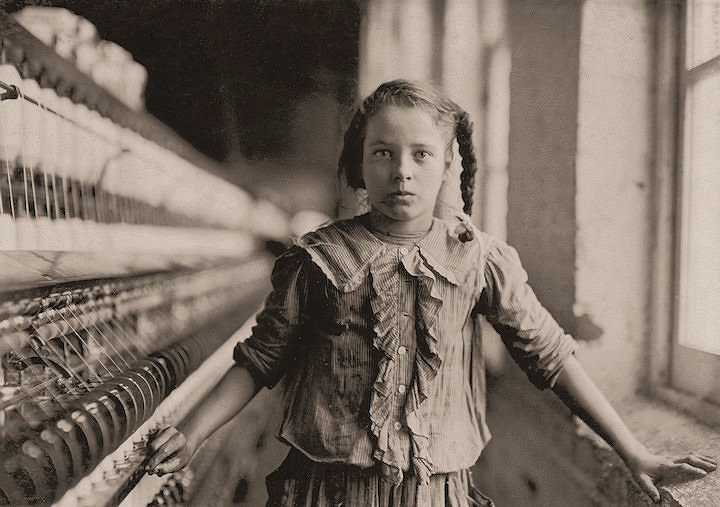
"One of the spinners in Whitnel Cotton Mill. She was 51 inches high. Has been in the mill one year. Sometimes works at night. Runs 4 sides - 48 cents a day. When asked how old she was, she hesitated, then said, "I don't remember," then added confidentially, "I'm not old enough to work, but do just the same." Out of 50 employees, there were ten children about her size. Whitnel, North Carolina." (The History Place)
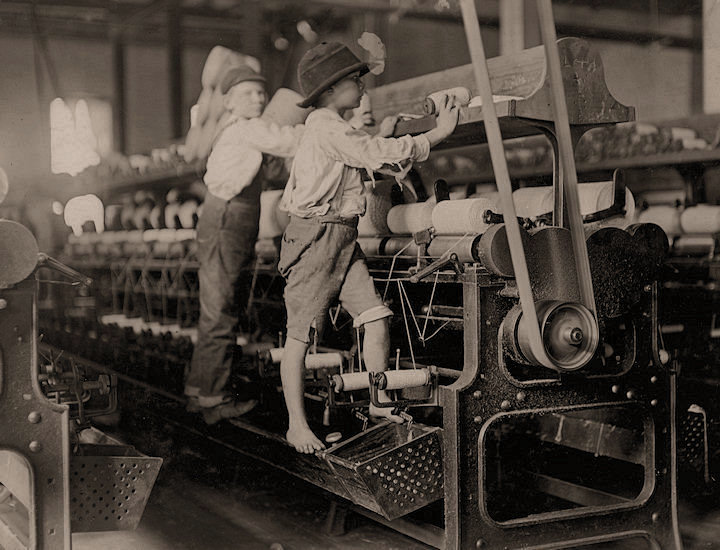
"Some boys and girls were so small they had to climb up on to the spinning frame to mend broken threads and to put back the empty bobbins. Bibb Mill No. 1. Macon, Georgia." (The History Place)