Hiring Women
Luminous Lives, Remarkable Legacy:
The Radium Girls' Fight for Workplace Rights and Employer Responsibilities
During World War I, girls aged 11-18 worked in factories painting glow-in-the-dark watch dials for soldiers, facilitating coordinated timed strikes and night attacks. These were later sold publicly. Their efficient, nimble hands earned them high wages. This website will focus on the Orange, New Jersey Radium Girls under the USRC. Similar factories also existed at Ottawa, Illinois, under the Radium Dial Company, and Waterbury, Connecticut, under the Waterbury Clock Company.
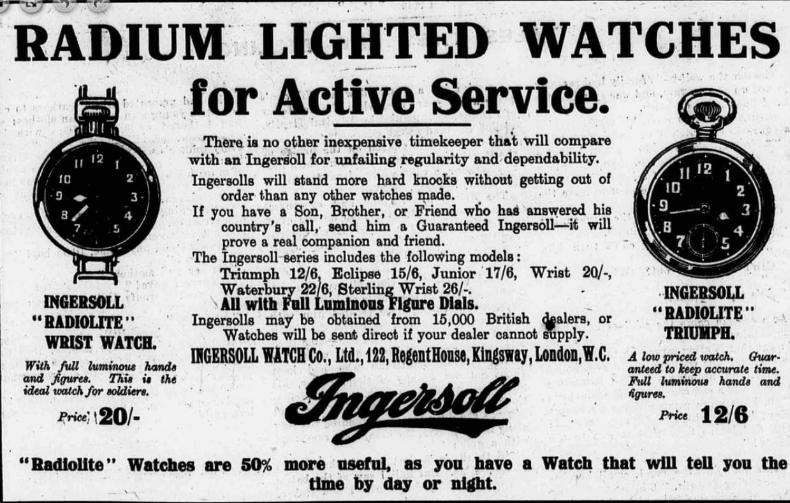
"Radium Lightened Watches" Advertisement. (AM 2020)
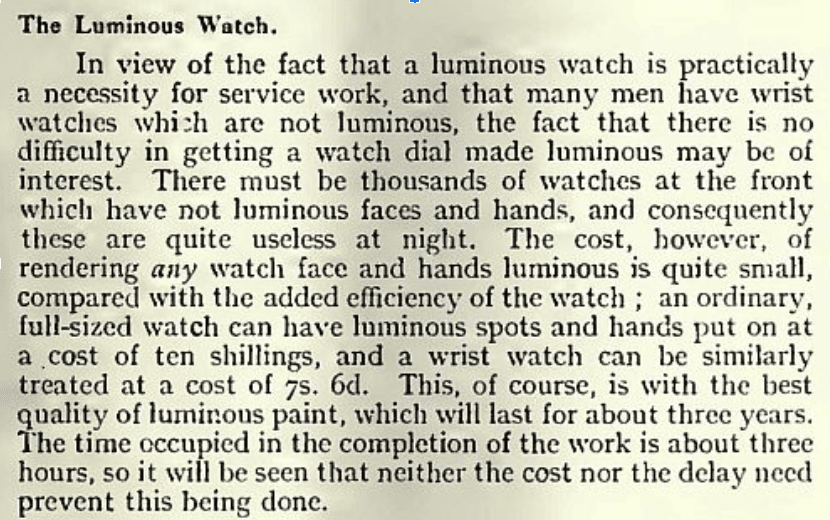
"Upgrading a non-luminous watch to luminous." (Boettcher 2016)
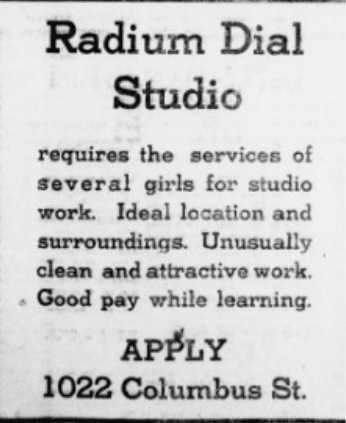
"Radium Dial Studio" employment advertisement, 'Ottawa Fair Dealer.' (Library of Congress 2019)
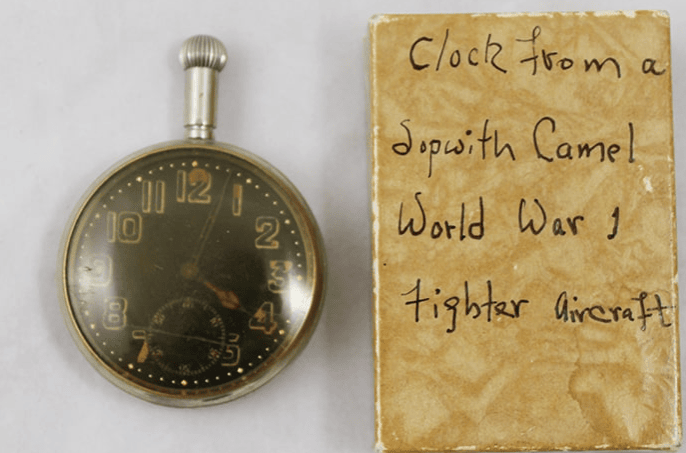
"An illuminating time piece: Shining a light on radium." (Anderson 2022)
"At the onset of World War I, several factories were established… to produce watches and military dials painted with a material containing radium, a radioactive element that glows in the dark."
(Vaughan)
Painting Dials
The Radium Girls ingested large quantities of radium because they were paid for piecework, painting up to 250 watch dials daily. Their employers instructed them to lip-point, creating fine brushpoints with their lips, but causing them to ingest lethal amounts of radium. Later, company officials denied this.
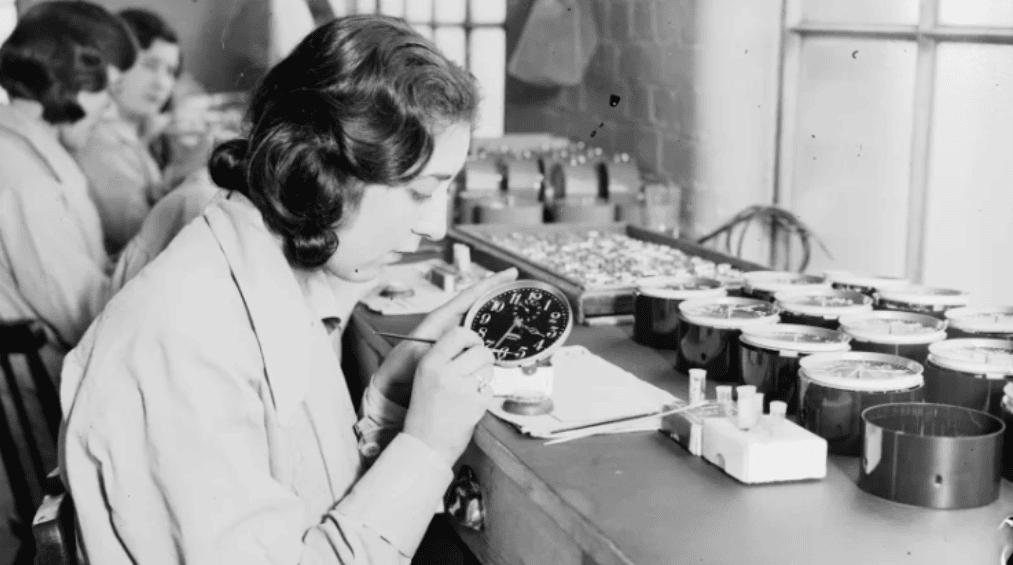
"Women painting alarm clock faces" in Waterbury, Connecticut. (Prisco 2017)

"Radium Girls work in a factory owned by the United States Radium Corporation." (Prisco 2017)
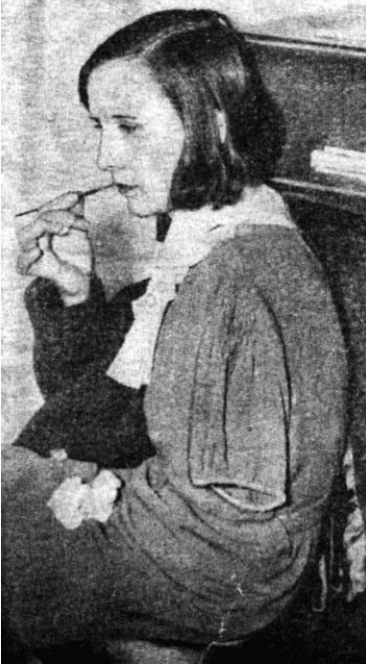
"Charlotte Purcell, one of the Ottawa women showing lip pointing process." (Jessica 2017)
Clip from "Radium City" of Radium Girl, Marie Becker Rossiter.(Praeses & Soapbox Productions 1987)
"Our instructors told us to point them with our lips. I think I pointed mine with my lips about six times to every watch dial. It didn’t taste funny. It didn’t have any taste, and I didn’t know it was harmful."
~ Grace Fryer
(Kovarik, Neuzil 1996)

"Women painting radium on watch dials for the proudly (and aptly) named Radium Dial Company." (Doerr)
Aware of the risks, the employers failed to fulfill their responsibility, prioritizing work over workers’ safety, and withholding information, leading the girls to glow-paint their hair, teeth, skin, and clothes.
"One time when the big boys from New York came down and they were supposed to be explaining this to us, they said there was no danger and several of the girls asked them questions and they never did answer them. They sidetracked a lot of them and they never came out and gave them a straight answer. I could tell they did not want to answer them."
Radium Girl from "Radium City". (Praeses & Soapbox Productions 1987)
"The most tragic aspect of the story is that the owners and scientists at USRC knew that radium is extremely toxic. They were careful to avoid any exposure to the radium themselves, using lead screens, masks and tongs to handle it, yet, encouraged its use by the public and did not recommend that workers be prevented from ingesting it. When the girls began to get sick and die, the company fought claims that radium exposure was linked to their workers’ illnesses and deaths for nearly two years, until public awareness of the tragedy adversely affected their business."
(NSC 2017)

"The operators used small camel’s hair brushes but were not instructed to point said brushes with their lips. The rule was the reverse, not on account of the thought of danger, but for sanitary reasons. The rule was never strictly enforced and many of the operators pointed the brushes with their lips. Some never followed this practice."

"However, it must be remembered that operators for the most part were on piece work, and in order to make good money their work must be speedy, and we understand that some of our agents told the operators that while it was against the rule to point the brushes with their lips, still they could speed up their work materially by so doing. This information was conveyed to the operators by our agents, but our officers and directors had no knowledge of such instructions."
(National Archives Medical Record)
(2025)
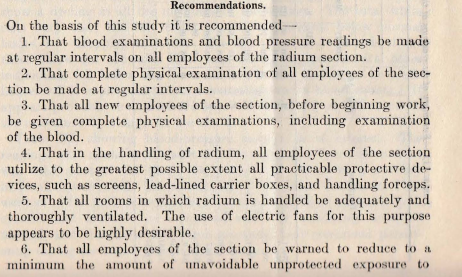
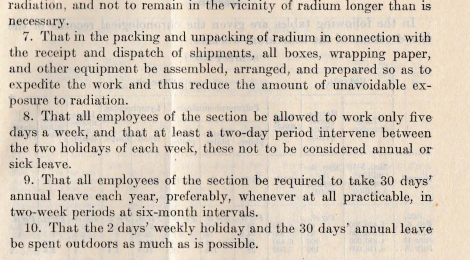
"United States Public Health Service" radium recommendations ignored by the watch dial companies. (Williams 1923)