Fighting for Rights
Luminous Lives, Remarkable Legacy:
The Radium Girls' Fight for Workplace Rights and Employer Responsibilities
In 1927, New Jersey workers Grace Fryer, Quinta McDonald, Albania Larice, Edna Hussman, and Katherine Schaub filed a lawsuit against USRC with lawyer Raymond Barry. Scheduled for January 1928, it was postponed until June because the victims were severely ill.
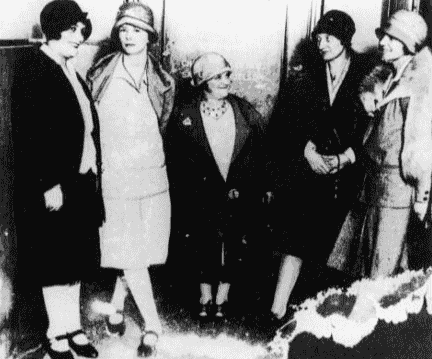
"The New Jersey “Radium Girls.” From left: Quinta McDonald, Edna Husmman, Albina Larice, Katherine Schaub and Grace Fryer on June 4, 1928." (Jessica 2017)
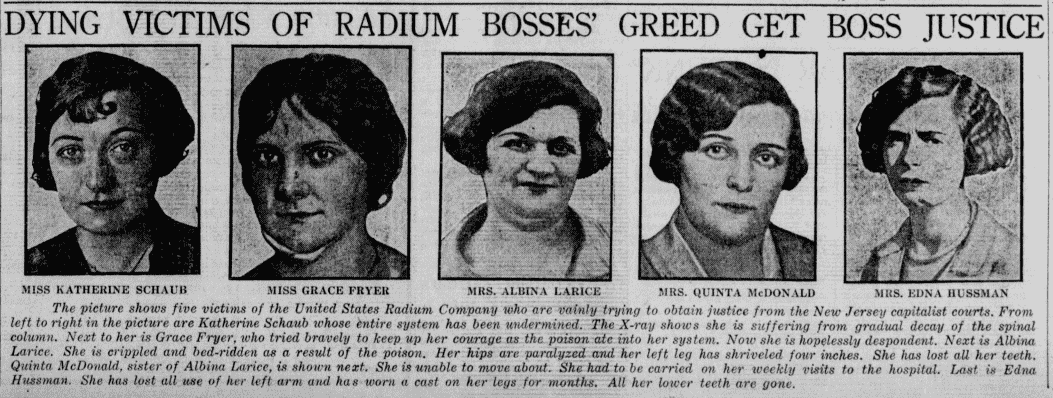
"Dying Victims of Radium Bosses' Greed Get Boss Justice." (The Daily Workery 1928)
"It is not for myself I care… I am thinking more of the hundreds of girls to whom this may serve as an example."
~ Grace Fryer
(Moore 229)
USRC president Clarence Lee attempted to publicly present the company well, claiming the women had pre-existing conditions and syphilis.
"Apparently hoping that the plaintiffs would die by the time the trial began, the company lawyers tried various delay tactics. They argued that because the women had left the job several years before they fell ill, the radium paint could not have caused their ailments. The judge rejected their claims, and a hearing finally took place in 1928."
"We unfortunately gave work to a great many people who were physically unfit to procure employment in other lines of industry. Cripples and persons similarly incapacitated were engaged. What was then considered an act of kindness on our part has since been turned against us."
~ Clarence Lee (president of USRC)
(Cowen 2022)
(Government of New Jersey)
"In March 1924, the company conducted a covert internal investigation led by Harvard physician Cecil Drinker. The investigation concluded in June, with Drinker informing the company that radium was the likely cause of the dial painters' illnesses and recommending some safety precautions. The company president rejected the findings, and the Drinker report was promptly buried. The USRC submitted a fraudulent report to the labour department with falsified results that exonerated them as not culpable for the women's illnesses."
(Bryan-Quamina 2023)
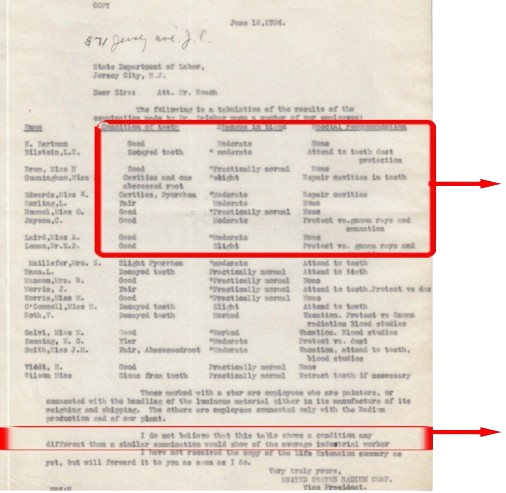
USRC’s falsified Drinker report (National Archives Catalog 1924)
Condition of Teeth: Changes in blood: Special reccomendation:
Good Moderate None
Decayed Teeth Moderate Attend teeth dust protection
Good Practically normal None
Cavities and one abcessed root Slight Repair cavities in teeth
Cavities, Pyorrhea Moderate Repair cavities
Fair Moderate None
Good Practically normal None
Good Moderate Protect vs. gamma rays and emanation
Good Moderate None
Good Slight Protect vs. gamma rays and emanation
I do not believe this table shows a condition any different than a similar examination would show of the average industrial worker.
Elizabeth Hughes, a former USRC physicist who measured Undark’s radioactivity, testified to radium’s dangers on behalf of the plaintiffs. She found the girls’ breath samples highly toxic from radium. USRC’s lawyer, Edward Markley, attacked Hughes’s credentials.
"He had her admit that she was a housewife with small children and had not worked in the laboratory for the past five years."
(Coursey 2022)
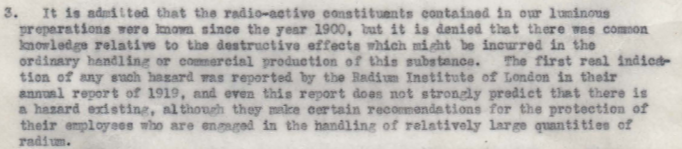
"It is admitted that the radio-active constituents contained in our luminous preparations were known since the year 1900, but it is denied that there was common knowledge relative to the destructive effects which might be incurred in the ordinary handling or commercial production of this substance. The first real indication of any such hazard was reported by the Radium Institute of London in their annual report of 1919, and even this report does not strongly predict that there is a hazard existing, although they make certain recommendations for the protection of their employees who are engaged in the handling of relatively large quantities of radium."
USRC stating radium’s dangers were unknown. (National Archives Medical Record)
USRC settled with the women to avoid bad publicity. Not expecting to live long, they accepted the offer, relinquishing future claims, while the company accepted legal responsibility. Besides compensation, the Radium Girls helped future workers gain rights to a safe environment and compensation for work-related damages.
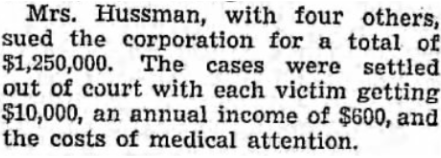
(Chicago Tribune 1939)
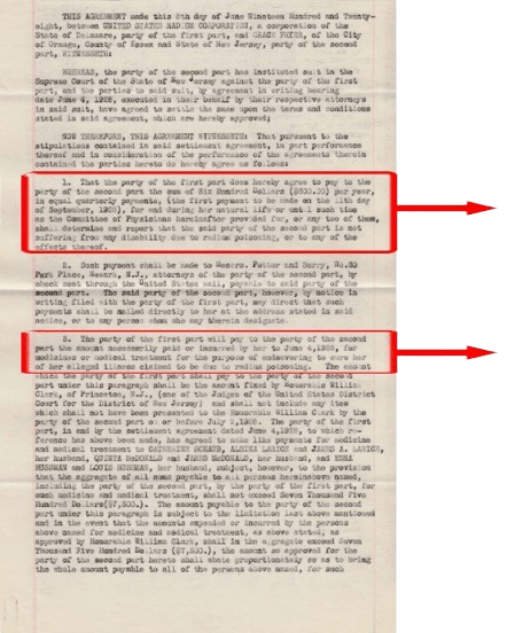
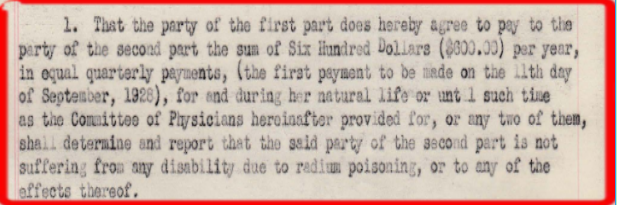
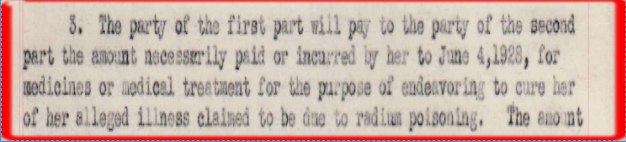
Lawsuit agreement June 8, 1928. (National Archives)
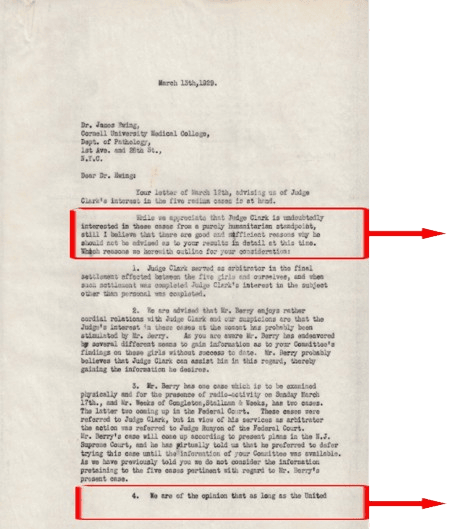
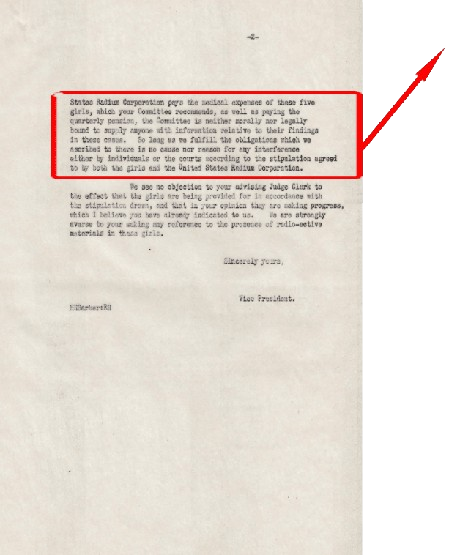


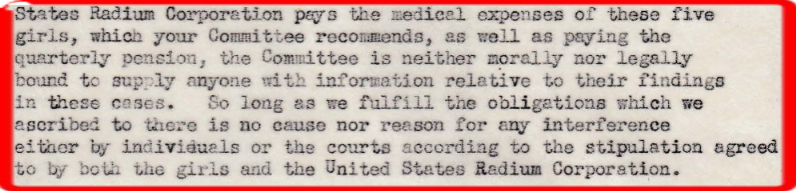
USRC Request. (National Archives)
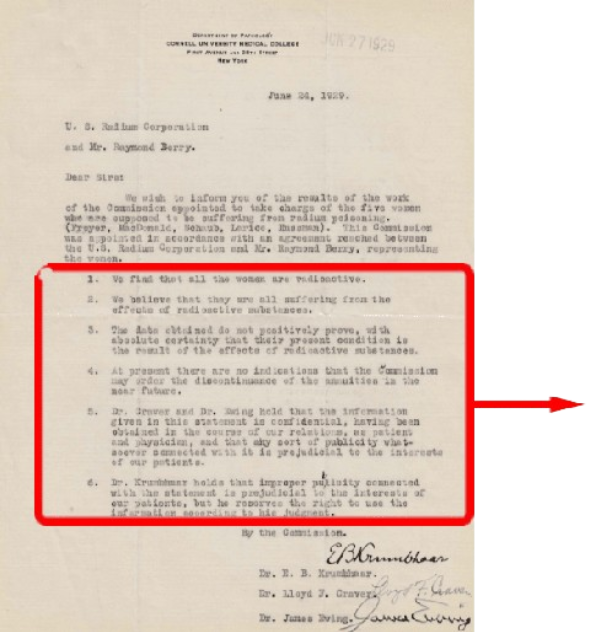
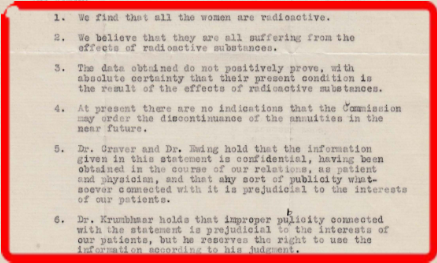
Doctors Report. (National Archives)
"They really help set those standards ... they were fighting for their own rights even though it was an uphill battle for them..."
~ Personal interview with Jeffery Semancik, Director of the Radiation Division for the Connecticut Department of Energy and Environmental Protection. (2025)